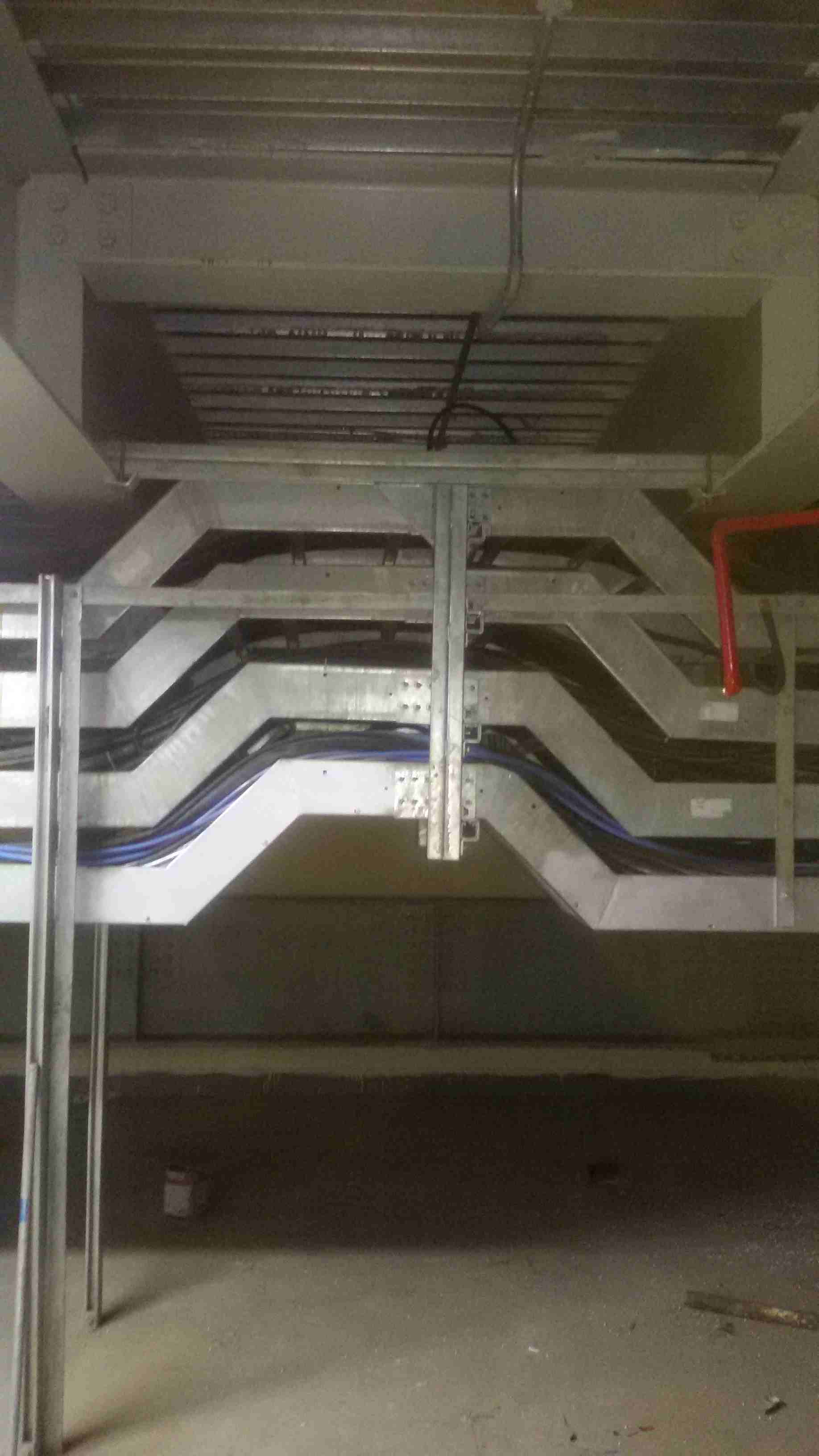
A multi-layer cable tray system is a vertically stacked arrangement of cable trays used to segregate and support different types of cables—such as power, control, instrumentation, and communication—within the same routing corridor, especially in space-constrained substation environments.
Function
Multi-layer cable trays allow for efficient use of vertical space by stacking trays at different elevations. This setup:
•Segregates cable types to prevent electromagnetic interference (EMI)
•Improves accessibility for maintenance and future expansion
•Reduces footprint in congested areas like control rooms, cable galleries, and switchyards
Typical Applications
•Substation control buildings and cable galleries
•Transformer yards and switchgear zones
•ESP and boiler areas in thermal power plants
•Along structural columns or walls where horizontal space is limited
Design Considerations
•Tray Types: Ladder-type trays are common for power cables; perforated or wire mesh trays for control and signal cables
•Vertical Spacing: Maintain minimum vertical clearance (typically 300–500 mm) between trays for cable bending and heat dissipation
•Cable Segregation: Follow standards like IEEE 525 or IEC 60364 to separate LV, MV, HV, and communication cables
•Support Structure: Use multi-tier brackets, cantilever arms, or modular framing systems anchored to walls or columns
•Load Rating: Ensure the structure supports cumulative weight of all trays and cables, factoring in dynamic loads during installation or maintenance
Installation Guidelines
•Install trays from bottom to top to simplify cable laying
•Label each tray tier for cable identification and routing clarity
•Use fire barriers or dividers where required between different voltage levels
•Ensure grounding continuity across all tray levels using bonding jumpers
•Provide drip shields or covers for trays carrying sensitive signal cables below power trays
Standards & References
•NEMA VE 1 & VE 2 – Metal cable tray systems and installation
•IEC 61537 – Cable management systems
•IEEE 525 – Guide for cable tray systems in substations
Image ID: #4
Multi layer cable tray
Advanced multi-layer cable tray system designed to separate and organize power, control, and data cables efficiently within a compact industrial footprint.
Technical Highlights
Key Features
Tiered support design
Magnetic isolation compliant
Space-saving vertical configuration
Need this engineering solution?
Contact our team for technical details or installation quotes related to this component.