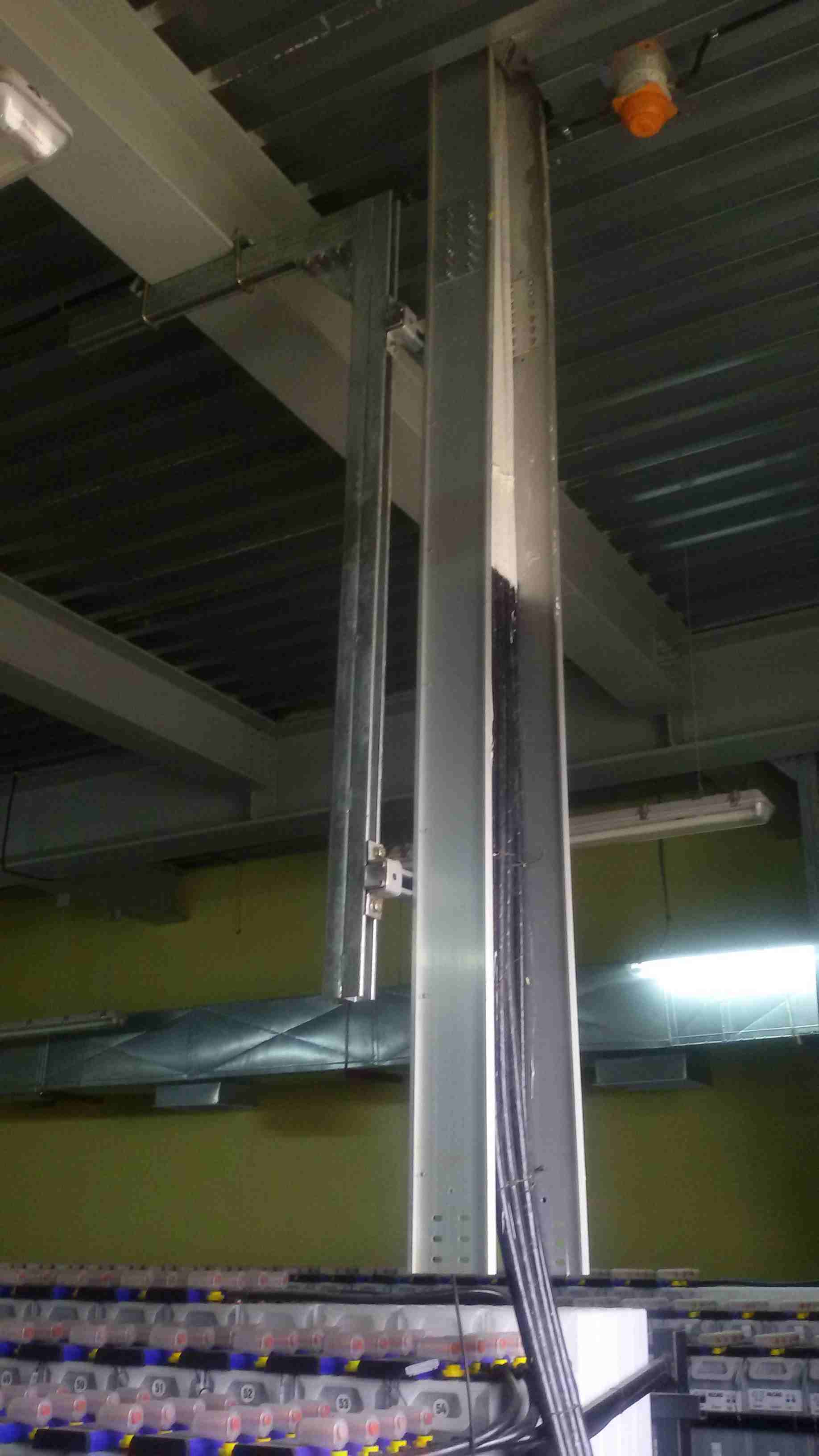
A vertical cable tray in a substation is used to route cables between different elevation levels, such as from underground trenches to control rooms or from ground level to elevated equipment platforms.
Function
Vertical cable trays provide structured pathways for power, control, and instrumentation cables to ascend or descend between levels. They are essential for maintaining cable integrity, minimizing stress, and ensuring organized routing in multi-level substation environments.
Typical Applications
•Routing cables from underground duct banks to switchgear or control panels
•Connecting transformer bushing terminals to overhead bus ducts
•Transitioning cables from cable trenches to elevated racks or control rooms
•ESP (Electrostatic Precipitator) and boiler areas in thermal power stations
•Cable risers along columns or walls in indoor/outdoor substations
Design Considerations
•Tray Type: Ladder-type trays are preferred for vertical runs due to better ventilation and cable support
•Material: Use galvanized iron (GI), aluminum, or stainless steel depending on corrosion exposure and mechanical load
•Bend Radius: Maintain minimum bend radius per cable type (refer to NEMA VE 1 or IEC 61537)
•Support Spacing: Vertical trays require closer support intervals (typically every 1.5–2 meters) to prevent cable sag
•Cable Securing: Use cable cleats or ties to prevent cable movement due to gravity or fault currents
•Fire Safety: In indoor installations, ensure fire-rated trays or fire barriers are used where required
Installation Guidelines
•Anchor trays securely to structural columns or walls using vertical brackets or cantilever arms
•Ensure trays are aligned and leveled to avoid cable abrasion
•Bond tray sections electrically for grounding continuity
•Label cable routes for maintenance and inspection access
•Coordinate with other services (HVAC, piping) to avoid clashes
Reference Standards
•NEMA VE 1 & VE 2 – Metal cable tray systems and installation practices
•IEC 61537 – Cable management systems
•IEEE 525 – Guide for cable tray systems in substations
Image ID: #2
Vertical Cable Tray Installation
Robust vertical cable tray installation demonstrating proper support and securing of heavy-duty power cables in a high-rise industrial environment for maximum safety and organization.
Technical Highlights
Project Location
Power Plant Complex
Material / Finish
Galvanized Steel / Aluminum
Key Features
Secured with high-strength cleats
Optimized for thermal expansion
Supports MV/HV Power Cables
Vertical spacing: 1.5m intervals
Need this engineering solution?
Contact our team for technical details or installation quotes related to this component.