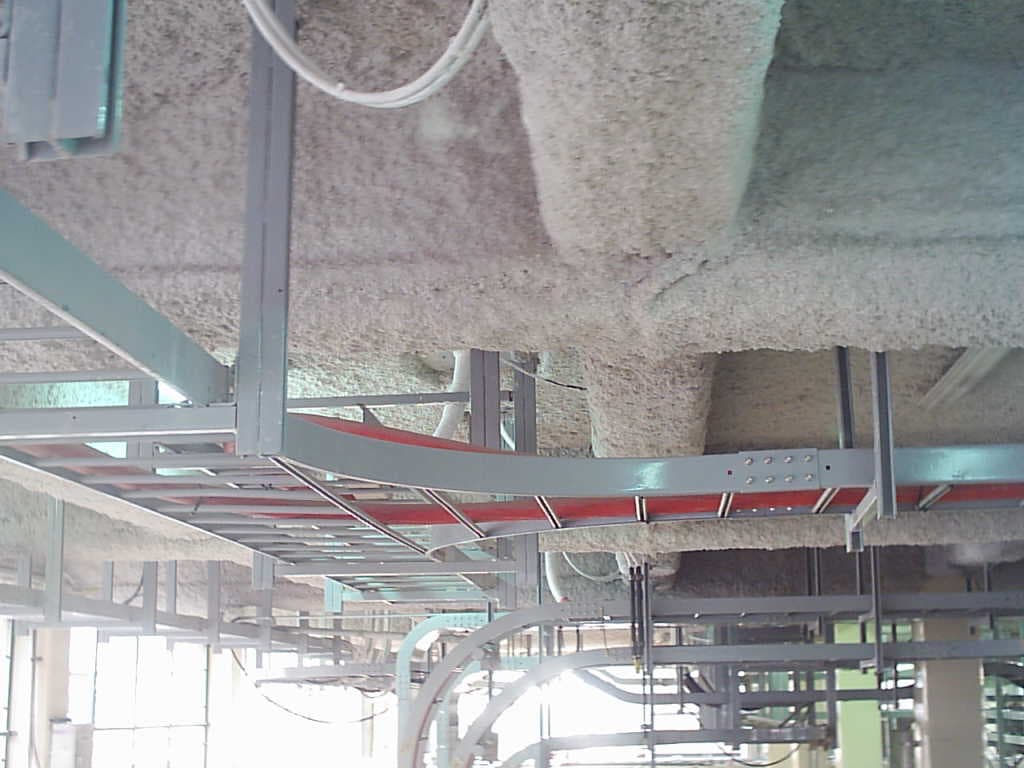
Overhead cable tray installation in substations involves mounting cable trays above ground level—typically on ceilings, beams, or structural frames—to route and support electrical cables safely and efficiently.
Function
Overhead cable trays provide elevated pathways for power, control, and instrumentation cables, helping to:
•Avoid ground-level congestion
•Improve accessibility and visibility
•Protect cables from mechanical damage and moisture
•Facilitate organized routing across long spans or between buildings
Typical Applications
•Control room ceilings
•Cable galleries and corridors
•Transformer bays and switchyards
•Boiler and ESP areas in thermal plants
•Industrial towers and pump houses
Design Considerations
•Tray Type: Ladder-type trays are preferred for overhead runs due to strength and ventilation
•Material: Use galvanized iron (GI), aluminum, or stainless steel depending on corrosion exposure
•Support Structure:
- Cantilever brackets for wall-mounted trays
- Hangers or trapeze frames for ceiling-mounted trays
- Post-and-beam structures for outdoor spans
•Spacing: Support intervals typically every 1.5–2 meters depending on tray load and span length
•Cable Segregation: Maintain separation between LV, MV, HV, and signal cables per IEEE 525 or IEC 61537
•Grounding: Bond tray sections and supports to maintain electrical continuity
Installation Guidelines
•Ensure trays are level and aligned to prevent cable stress
•Use vibration-resistant fasteners and anchor bolts
•Label tray sections and cable routes for maintenance access
•Avoid routing near heat sources or moving equipment
•Provide drip shields or covers in outdoor or wet areas
•Coordinate with HVAC, piping, and structural layouts to avoid clashes
Applicable Standards
•NEMA VE 1 & VE 2 – Metal cable tray systems and installation practices
•IEC 61537 – Cable management systems
•IEEE 525 – Guide for cable tray systems in substations
•IS 8623 – Indian standard for cable support systems
Image ID: #7
Overhead Cable Tray Installation
Professional overhead cable tray installation maximizing floor space while providing accessible and secure routing for main power distribution lines.
Need this engineering solution?
Contact our team for technical details or installation quotes related to this component.