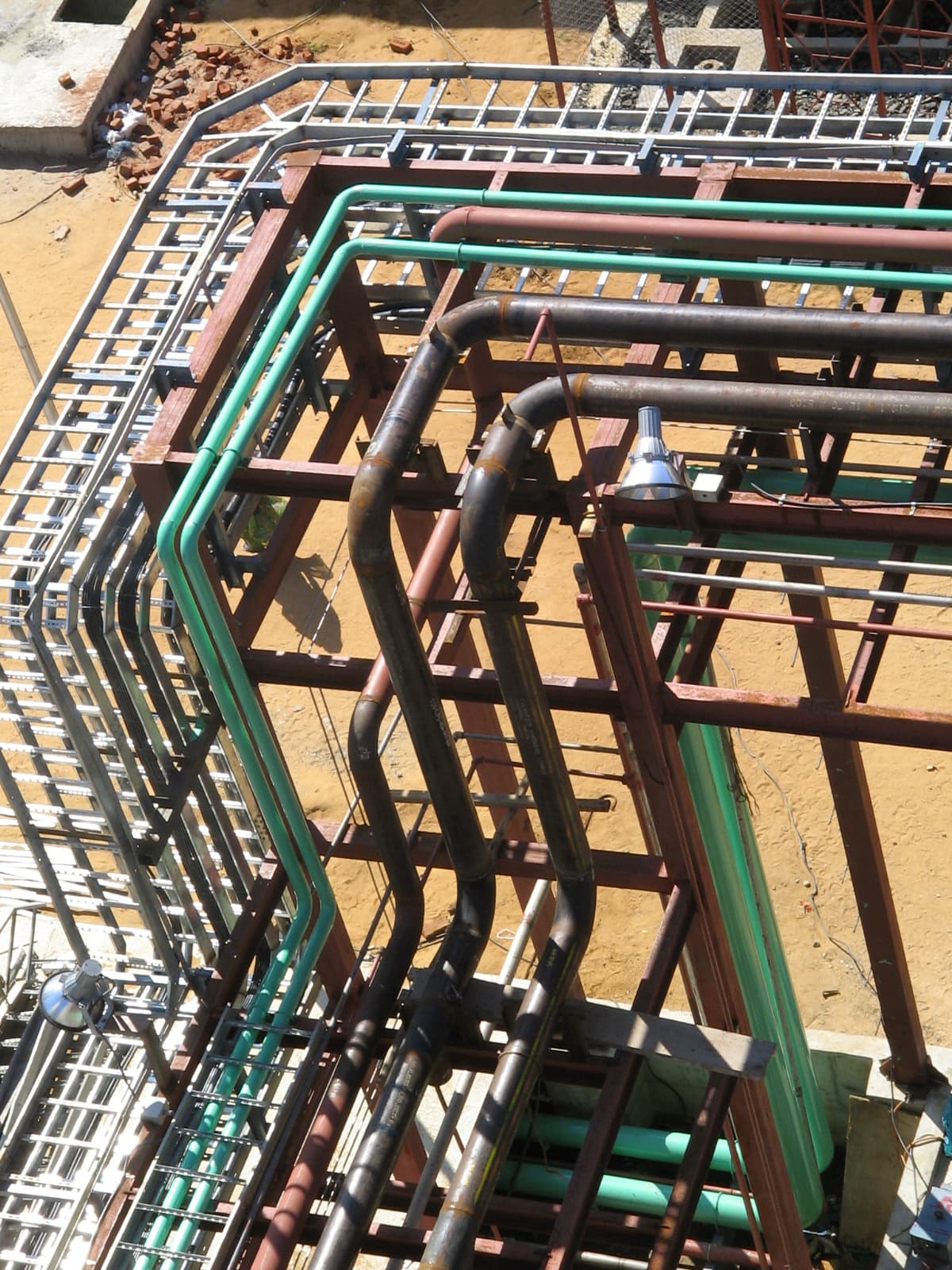
Strategic cable tray routing involves planning optimal paths for cable management systems to ensure efficient, safe, and accessible cable installations.
Routing Principles
•Shortest path: Minimize cable lengths to reduce costs and losses
•Obstruction avoidance: Route around equipment, HVAC, and structural elements
•Accessibility: Ensure access for maintenance and future modifications
•Segregation: Separate power, control, and communication cables
Design Considerations
•Follow NEMA VE 1 and IEC 61537 for tray selection and sizing
•Maintain minimum bend radius at all direction changes
•Provide expansion joints for thermal movement
•Include fire barriers at penetrations through fire-rated walls
Best Practices
•Document routing with as-built drawings
•Label cable routes for identification
•Coordinate with other disciplines (mechanical, structural)
•Plan for future expansion capacity
Image ID: #21
Cable Tray Routing
Strategic cable tray routing overview demonstrating efficient path planning to avoid obstructions and minimize cable lengths.
Need this engineering solution?
Contact our team for technical details or installation quotes related to this component.