
GalleryCable Tray Installation with Power Cables
Back to Gallery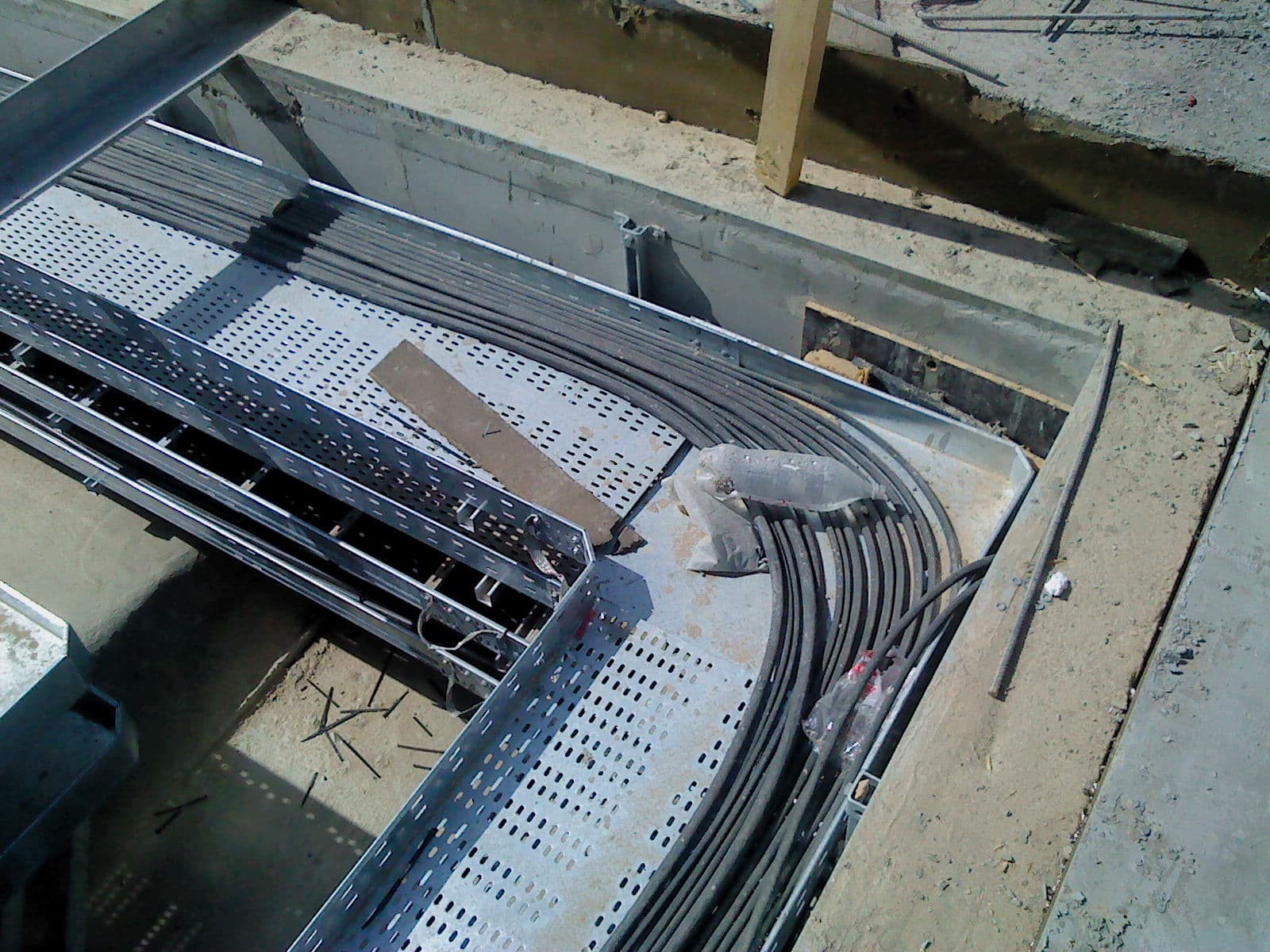
Cable Tray Installation with Power Cables
ksvengineering.com
Technical Overview
Cable tray installations with power cables require careful attention to load capacity, heat dissipation, and cable separation to ensure safe and efficient operation.
Cable Fill Considerations
- •NEC Article 392: Provides fill requirements for cable trays
- •Heat dissipation: Adequate spacing prevents overheating
- •Future expansion: Leave 20-30% spare capacity
Cable Separation
- •Separate power cables from control and signal cables
- •Maintain minimum spacing between voltage classes
- •Use dividers or separate trays for different circuit types
Installation Guidelines
- •Secure cables with ties at regular intervals
- •Avoid crossing cables at sharp angles
- •Label cables at both ends and at regular intervals
- •Document cable routing on as-built drawings
Load Verification
- •Calculate cumulative cable weight per meter
- •Verify tray and support capacity
- •Check bend radius at direction changes
- •Ensure proper grounding of cable armor and tray